
Sinxtzeqor
Sinxtzeqor
Sinxtzeqor coordinates heavy transport logistics and material flow for active building sites across the region. Every truck route and delivery window is managed carefully to keep your construction timeline moving without unnecessary delays or idle machinery.
Our modern fleet of dump trucks ensures reliable hauling of bulk materials directly to active zones.
Strict adherence to site schedules prevents congestion and keeps every phase of work running smoothly.
Experienced drivers navigate tight access roads and difficult terrain with precision and safety.
Building a structure takes more than raw effort and architectural blueprints. Every cubic meter of gravel, every pallet of blocks, and every ton of asphalt must arrive precisely when the crew needs it. Without careful planning, the site turns into a gridlock of idling machinery and frustrated workers.
Getting heavy transport right is the backbone of any successful construction project. When dump trucks move in a predictable rhythm, materials flow from the quarry straight into the foundations without missing a beat.
Before a single wheel touches the dirt, the delivery schedule must be mapped out in detail. A well-designed logistics plan accounts for the capacity of the unloading zones, the turning radius of large vehicles, and the daily productivity of the working crews.
If too many trucks arrive at once, they block access roads and create bottlenecks. If too few arrive, expensive excavators and laborers stand idle, wasting both time and effort.
Managing the arrival of heavy dump trucks requires constant communication between the dispatch office and the site supervisor. The terrain inside the gates changes daily, making route adjustments necessary.
Drivers need clear instructions on where to back up, how to tip their beds safely, and which paths to avoid after heavy rain. Mud and soft soil can easily trap a fully loaded vehicle, halting operations for hours.
Material delivery is never a standalone task; it follows the natural evolution of the building process. Early site preparation demands crushed stone for stabilizing access tracks and creating firm working platforms.
As excavation deepens, the volume of removed earth spikes, requiring a steady stream of empty trucks ready to haul dirt away. Later, as structural work begins, the focus shifts entirely to incoming supplies like concrete aggregates, steel reinforcements, and masonry units.
Every construction site presents its own unique set of geographic and operational challenges. Narrow streets in urban areas restrict large vehicles, forcing planners to use smaller trucks or arrange off-site transfer stations.
Rural sites often suffer from unpaved approach roads that deteriorate rapidly under the weight of heavy machinery. Maintaining these routes with fresh gravel keeps the supply chain moving smoothly regardless of external conditions.
Reliable material delivery is ultimately about respecting the rhythm of the work. When transport is treated as an integrated part of construction rather than an afterthought, projects finish cleaner, faster, and with far fewer unexpected obstacles along the way.
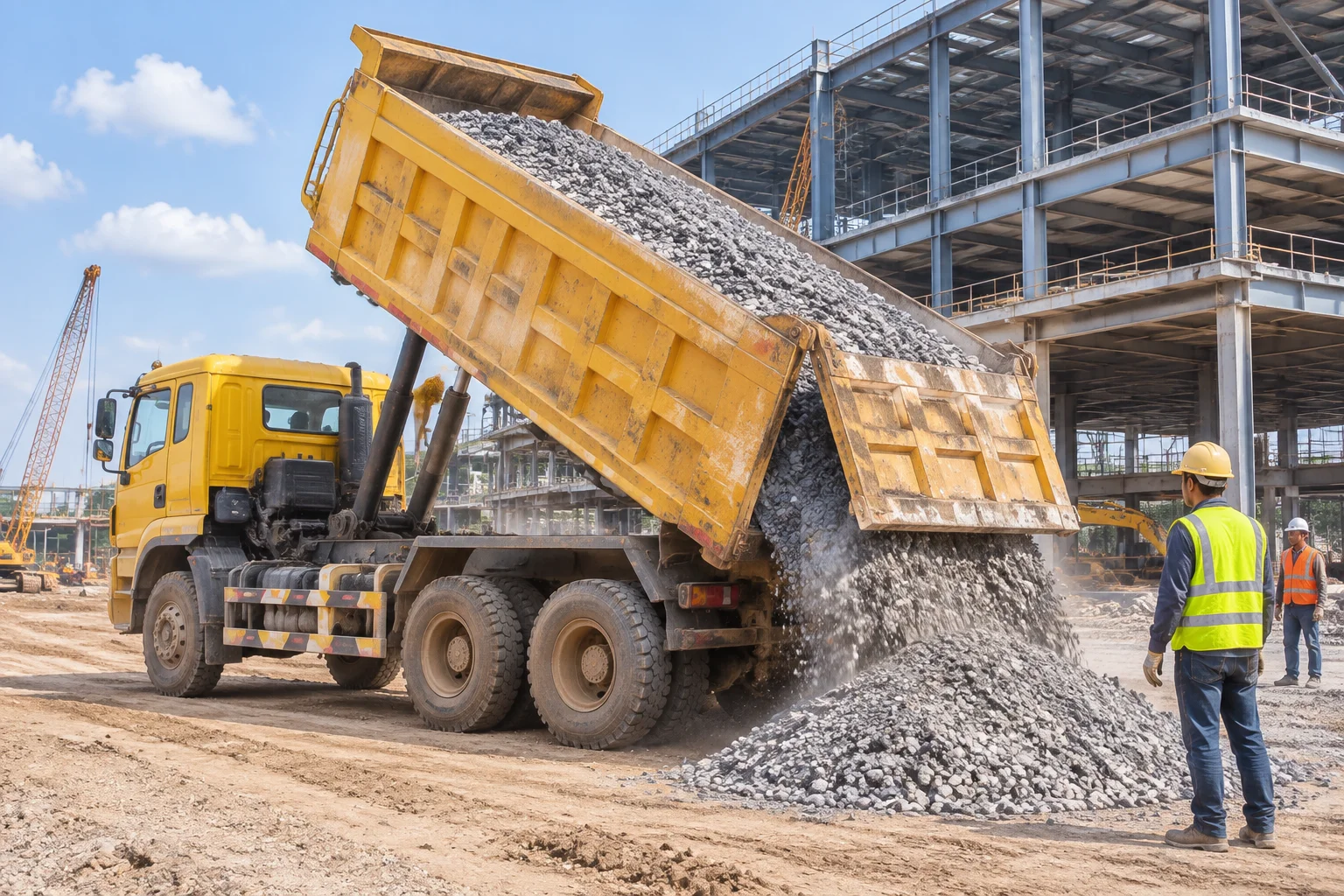
Bulk transport of crushed stone, gravel, and sand directly to the active unloading zone.
Detailed scheduling of truck rotations to match the daily capacity of pouring crews.
On-site route assessment to identify safe turning radiuses and stable ground conditions for heavy vehicles.
Temporary material stockpiling management to prevent bottlenecking near active foundations.

Managing material flow on a tight urban plot requires absolute precision. The dump trucks arrived on schedule every single day, keeping our masons fully supplied without piling up excess mess.
Arman Petrosyan
Logistics Coordinator

Good logistics make all the difference when you are pouring concrete slabs. Having the transport schedules matched to our mixer capacity saved us hours of standing around waiting.
Anush Harutyunyan
Fleet Dispatcher

Getting crushed stone delivered to our foundation site used to be a constant headache until we streamlined the truck rotations. Now every load arrives right when the crew is ready for it.
Vardan Sargsyan
Site Supervisor